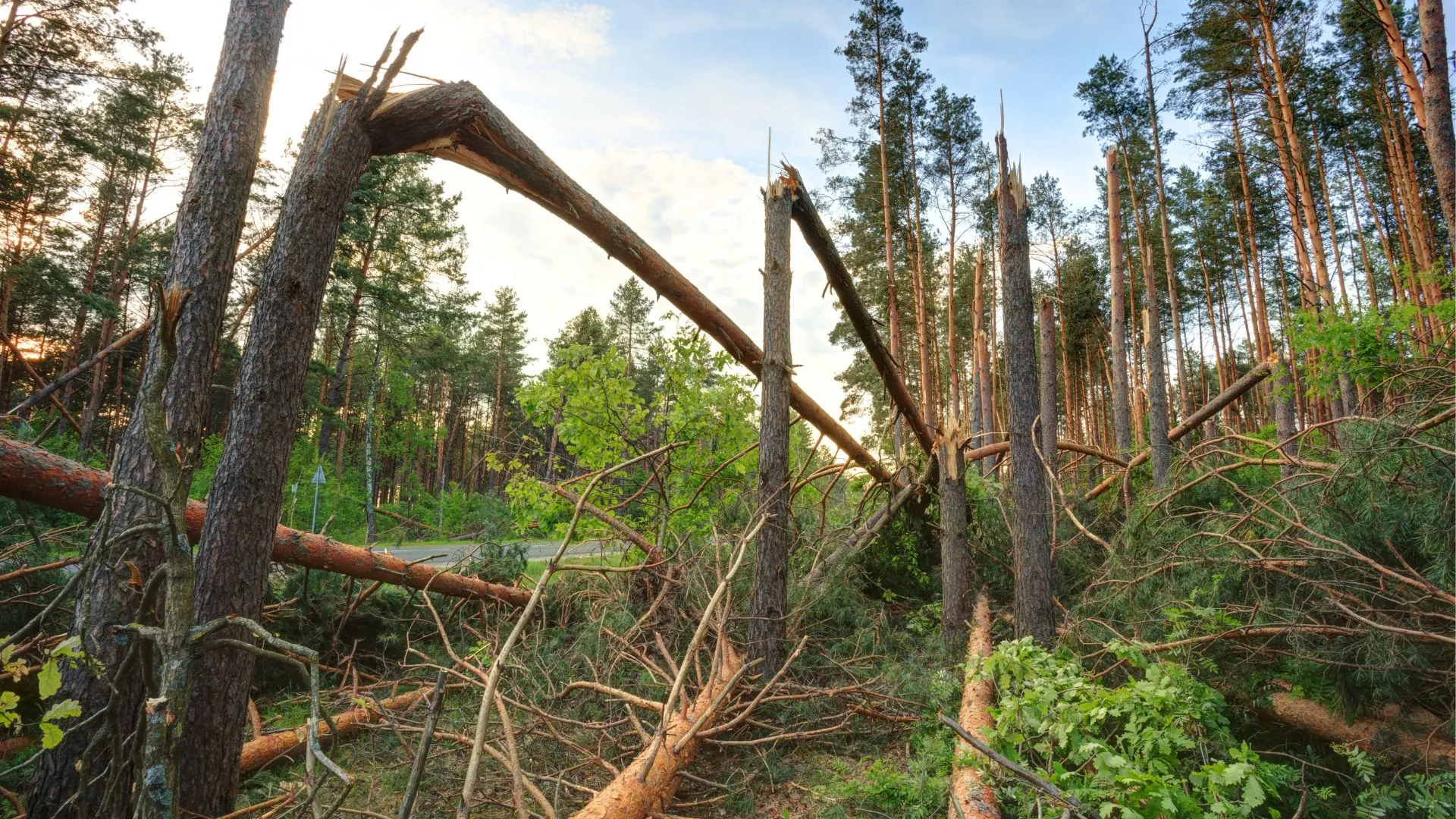
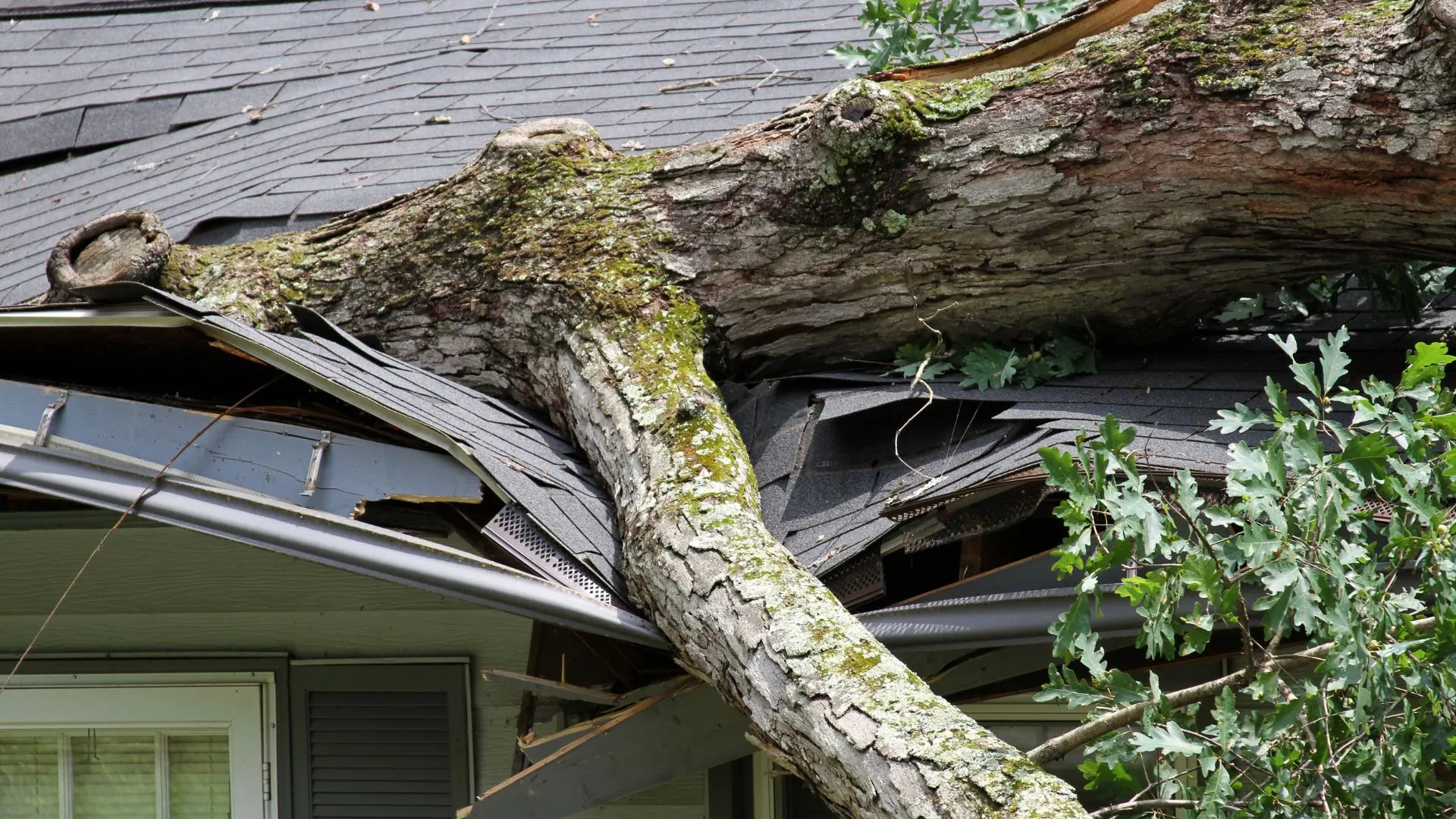
There’s no good time for a tree to come down. It usually happens at night, in the middle of a storm, or on the one weekend you had plans. One minute everything is normal, and the next there’s a trunk across your roof or your car.
We’ve helped a lot of families through this, from a tree on a house in Mayville the morning after a tornado to a tree lying across a car that had to come off without making the damage worse. This guide lays out exactly what to do, in order, so you stay safe and don’t make the situation more expensive.
Step 1: Keep Everyone Safe in the First Few Minutes
Before you think about the tree, think about people.
- Get everyone away from the tree. That includes kids, pets, and curious neighbors.
- Look up and around for wires. Assume every wire is live, even if the power seems to be out.
- Call 911 if anyone is hurt, if a wire is down, or if you smell gas.
- Leave the house if the tree came through the roof and you hear creaking, see a sagging ceiling, or smell gas.
- Don’t go back under the tree to grab belongings.
When a Tree Takes Down Power Lines
Stay far away from any downed wire and anything it’s touching, including the tree, a fence, a puddle, or a car. Call 911 and We Energies. Tree crews can’t safely start work until the utility has made the lines safe, so that call comes first.
When a Tree Lands on the House
A tree on the roof can shift as it settles, especially if the wind is still blowing. Move everyone out of the rooms under the damage. If rain is coming in, catch it with buckets from a safe spot, but don’t climb onto the roof or into the attic under the trunk.
When a Tree Falls on a Car or Across the Driveway
Don’t try to drive out from under it or pull the car free. Moving the car can drop more weight on it. If a tree blocks the only way out and someone needs medical help, call 911. First responders can get to you.
Step 2: Look Over the Damage From a Safe Distance
Once everyone is safe, take a slow walk around at a distance. You’re not trying to fix anything yet, just to understand what happened.
- Where did the tree hit? Roof, siding, deck, fence, car, or just the lawn?
- Is anything still hanging? Broken limbs caught up high are called hangers, and they can fall later.
- Are other trees damaged? A storm that drops one tree often cracks the ones next to it.
- Is the root plate lifted? A tree that tipped over can pull up a big slab of soil and roots.
- Did it come from your yard, a neighbor’s, or the street terrace?
Step 3: Take Photos for Your Insurance Company
Do this before anything gets moved, cut, or cleaned up.
- Take wide shots that show the whole tree and the house.
- Take close-ups of every spot where the tree hit.
- Shoot a short video walking around the scene.
- Photograph the stump or root plate, which helps show whether the tree was healthy.
- Write down the date and time, and what the weather was doing.
- Save receipts for tarps, plywood, or anything else you buy to stop further damage.
Tip: Most policies expect you to take reasonable steps to prevent more damage, like tarping a hole in the roof. Keep every receipt, and don’t throw away damaged items until your adjuster says it’s OK.
Step 4: Call a Tree Crew That Works Around the Clock
Removing a fallen tree is some of the most dangerous work in our trade. Please don’t try it with a chainsaw from the hardware store.
Why a Fallen Tree Is So Dangerous to Cut
When a tree falls, the trunk and limbs get bent and twisted. Some wood is under huge pressure, like a loaded spring. Cut in the wrong spot and a limb can whip sideways, the trunk can roll, or the weight on your roof can shift and cause more damage. That’s how a lot of storm cleanup injuries happen.
How Our Crew Gets a Tree Off a House
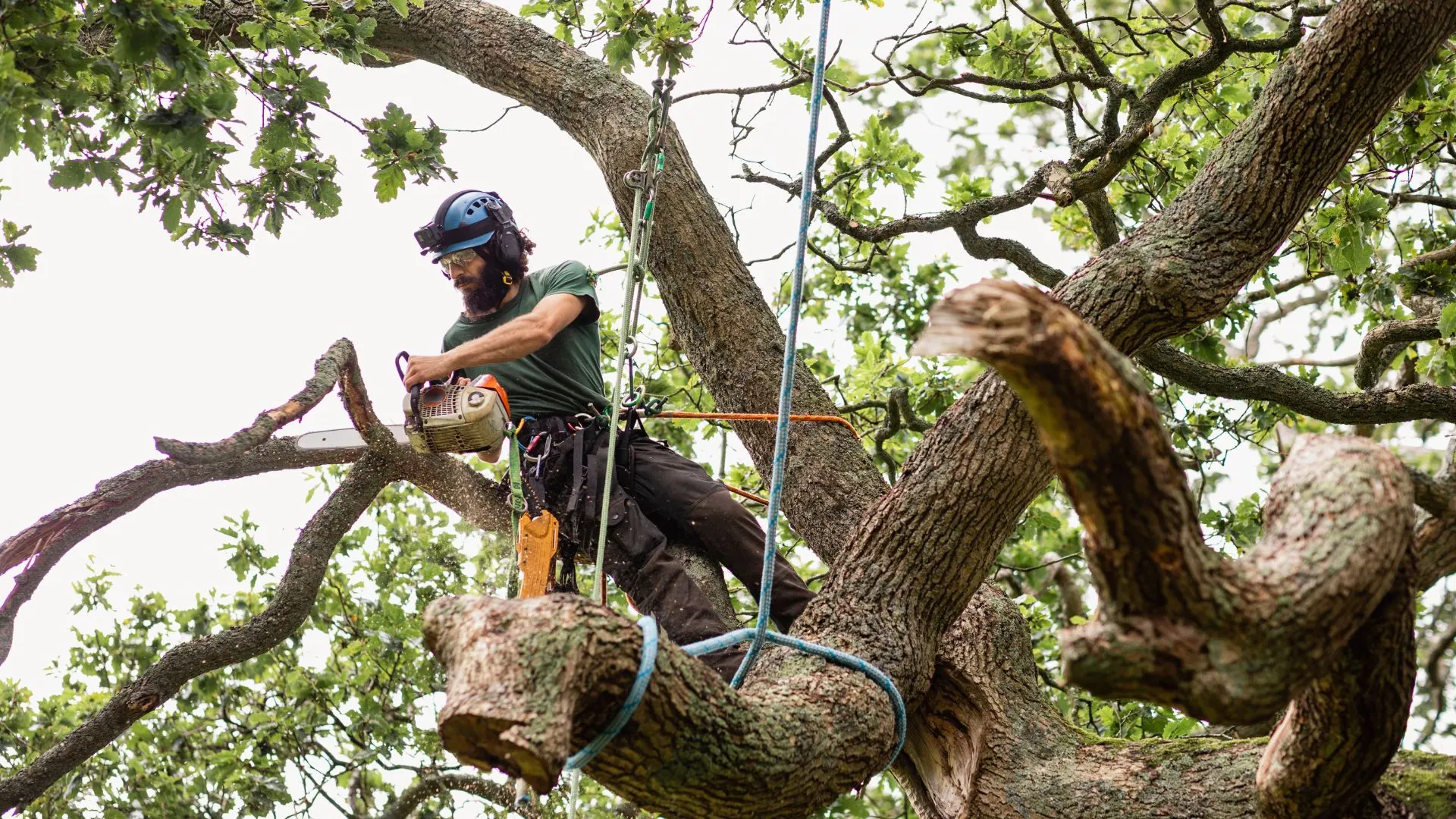
We plan every piece before we cut it. Our crew climbs or uses an aerial lift to take weight off the top first. Branches are cut in small pieces and lowered with ropes, so nothing drops onto the roof. Heavy trunk sections are lifted off with our grapple loader. The goal is simple: get the tree off without adding a single new dent.
Alpha Tree Service is open 24 hours a day, 7 days a week for emergency tree service. Once the tree is off the house, we handle the rest of the mess with storm damage cleanup.
Small Storm Cleanup You Can Handle Yourself
Not every fallen branch needs a crew. If a storm drops small limbs on the lawn and nothing is hung up above you, it’s usually fine to clean up on your own. Here’s a simple rule:
- Go ahead and pick up branches you can lift and drag by hand.
- Go ahead and use hand pruners or a small saw on limbs lying flat on the ground, not bent or pinned.
- Stop if a branch is bent under pressure, pinned under something else, or still attached to the tree.
- Stop if you’d need to stand under the tree, climb a ladder, or cut above your shoulders.
- Stop if anything is near a wire.
When in doubt, send us a photo. We’d rather tell you it’s a safe DIY job than have you guess.
Step 5: Sort Out Insurance and Who Pays
Every policy is different, so call your agent early. But here’s how it often works in Wisconsin:
| What Happened | Who Usually Handles It |
|---|---|
| Your tree falls on your house or garage | Your homeowners policy, often with a limit for tree removal |
| A neighbor’s healthy tree falls on your house | Usually your own homeowners policy |
| A neighbor’s dead tree falls after they were warned | Their insurance may be responsible; ask your agent |
| A tree falls in your yard and hits nothing | Often not covered, or covered only in limited cases |
| A street or terrace tree falls on your property | Call your village or city; the tree is usually theirs |
| A tree takes down the line to your house | Call We Energies about the line; your agent about damage |
Watch Out for Storm Chasers
After big storms, out-of-town crews sometimes go door to door offering fast tree removal. Some do fine work. Others don’t carry insurance, ask for big cash deposits, or disappear halfway through.
Before you let anyone start:
- Ask for proof of insurance, including liability and workers’ comp. We’re happy to show ours.
- Get a written quote with the full scope of work.
- Don’t pay the whole bill up front.
- Check local reviews from people in your area.
Our checklist for hiring a tree service covers every question worth asking.
After the Tree Is Gone
Once the emergency is over, a few loose ends are worth handling:
- Check the rest of your trees. A storm strong enough to drop one tree may have cracked others.
- Deal with the stump. Grinding it out lets you reseed the lawn or replant.
- Repair lawn ruts from the tree or equipment in spring, when the ground firms up.
- Plan a replacement. Our list of the best trees to plant in Wisconsin yards is a good place to start.
To lower the odds of this happening again, read are your trees storm-ready?
We’re Here When a Tree Comes Down
If a tree has fallen on your home, car, or yard anywhere in Ozaukee, Washington, or Sheboygan counties, call us any time, day or night. We’ll make it safe, get it cleaned up, and give you a free written quote you can hand to your insurance company.