Wisconsin winters are long, and they’re hard on trees in ways most people never think about. It isn’t just the cold. Our trees are built for cold. What hurts them is heavy snow, ice, dry wind, road salt, and the wild swings from thaw to deep freeze that we get every February.
The good news is that a little work in the fall goes a long way. Here are five steps we recommend for every yard in Ozaukee, Washington, and Sheboygan counties, plus what to do once the snow actually shows up.
What a Wisconsin Winter Does to Your Trees
It helps to know what you’re protecting against. Here’s what we see each spring when the snow melts:
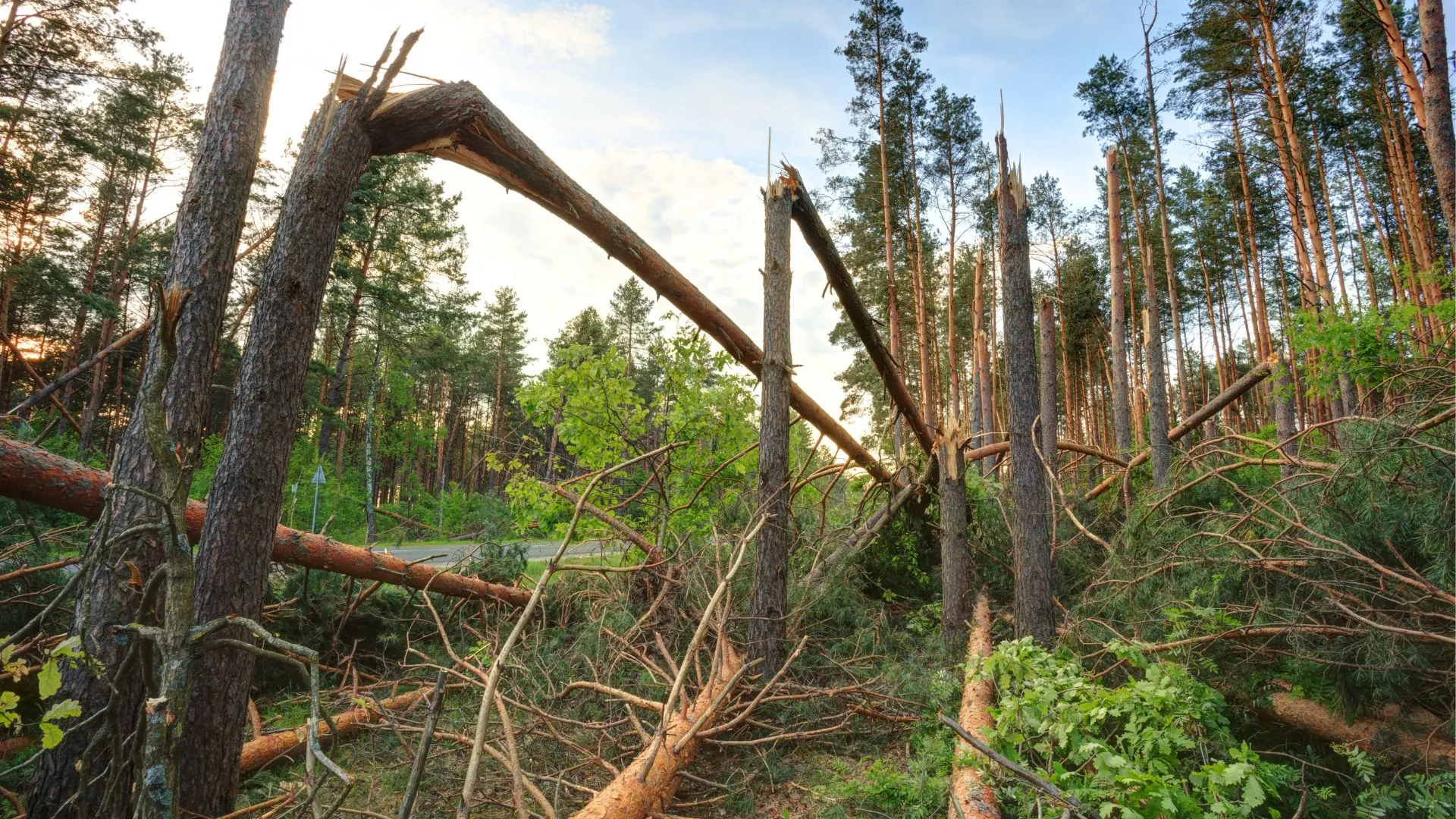
- Snapped limbs and split trunks from heavy, wet snow, especially in late-season storms in March and April
- Ice damage on brittle trees like silver maple, birch, and dead ash
- Vertical cracks in the trunk from frost and sudden temperature swings
- Brown, burned evergreens from dry wind and winter sun
- Salt damage on spruce, pine, and arborvitae near roads and driveways
- Chewed bark at the base of young trees from rabbits and voles
Homes near Lake Michigan, from Port Washington up past Belgium and Cedar Grove, also get strong northeast winds that push trees in a direction they’re not used to. Inland spots around West Bend and Kewaskum tend to see colder nights and deeper frost.
Step 1: Prune Weak Limbs Before the Heavy Snow
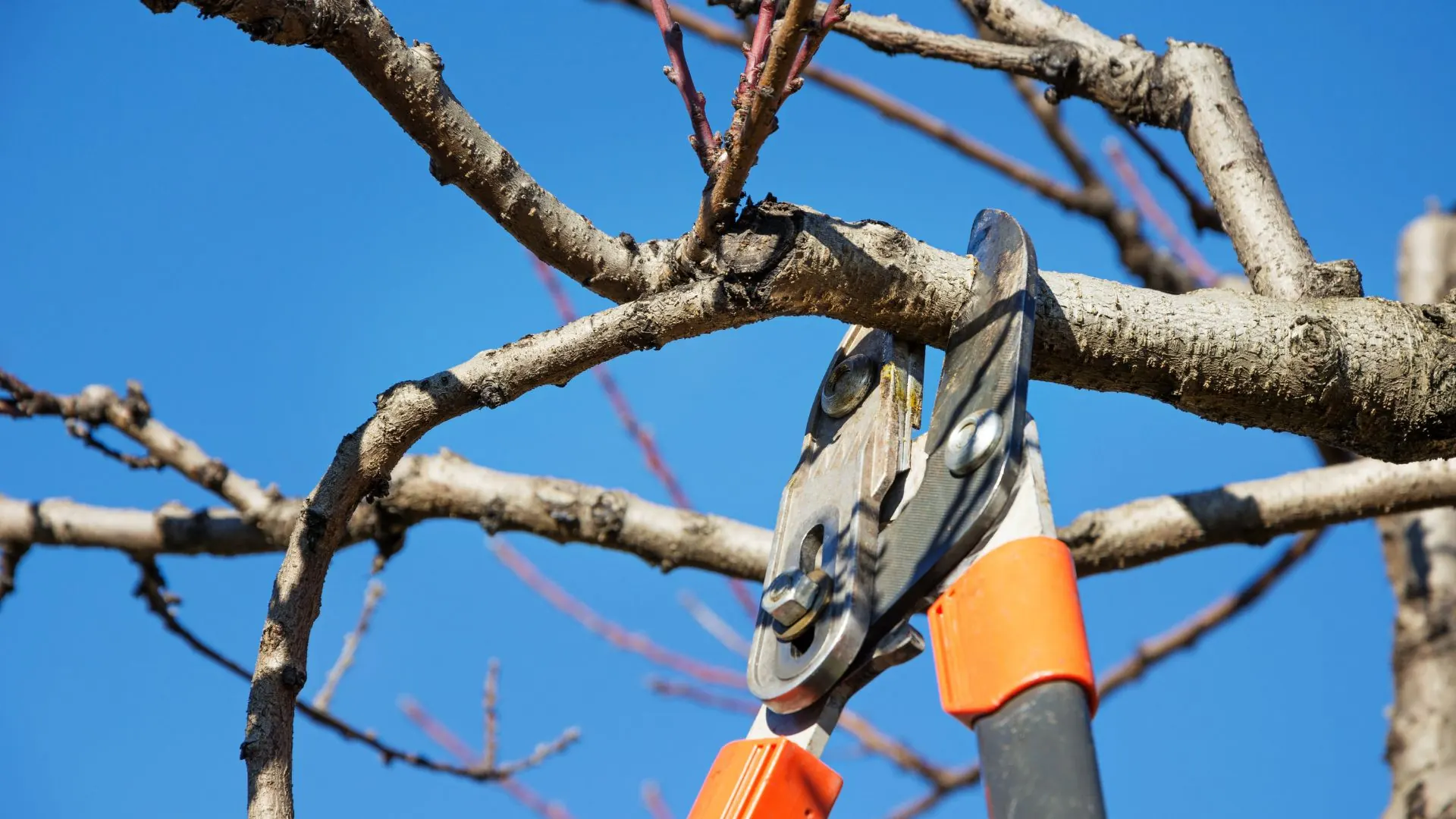
A limb that’s already cracked, dead, or badly attached is the first thing to break when it’s carrying a foot of wet snow. Getting those limbs out ahead of time is the best thing you can do.
Late fall and winter are great times to prune most trees. The leaves are down, so problems are easy to see. The trees are dormant, so they handle cuts well. And for oaks, winter is the safe season. Wounding oaks from April through July can spread oak wilt, so we save oak work for the cold months. Our guide on when to prune trees in Wisconsin has the full calendar.
Which Limbs to Target Before Snow Season
- Dead branches of any size over the house, driveway, or walkways
- Cracked or split limbs left over from summer storms
- Branches rubbing on each other, which wears through the bark
- Long, heavy limbs that stick far out from the trunk, since snow piles up on them
- Branches hanging over the roof, which can drop snow and ice onto shingles and gutters
- Tight “V” forks on young trees, before they grow into a weak spot
For big trees or anything near wires, call a pro. Our tree trimming crew works all winter long.
Step 2: Mulch the Root Zone the Right Way
Mulch works like a blanket for roots. It keeps the soil temperature steadier, which cuts down on frost heaving in our clay soils. It also holds moisture and keeps mowers and string trimmers away from the trunk.
Here’s how to do it right:
- Spread 2 to 4 inches of wood chips or shredded bark.
- Go wide. Cover a circle at least a few feet out from the trunk, and farther on big trees.
- Keep it off the bark. Leave a few inches of bare space around the trunk.
- Never build a “mulch volcano.” Mulch piled against the trunk holds moisture on the bark and invites rot, insects, and mice.
Tip: Need mulch? We send out free wood chips through ChipDrop when we’re working nearby. Fresh chips are great for mulching trees and beds.
Step 3: Give Trees a Deep Drink Before the Ground Freezes
Once the soil freezes, roots can’t pull in water. But evergreens keep losing water through their needles all winter long, especially on sunny, windy days. If they go into winter dry, they brown out.
Water deeply in October and November when we’ve had a dry fall:
- Soak slowly. A hose on a slow trickle or a soaker hose works better than a sprinkler.
- Water the root zone, not just the trunk. Most feeder roots are out near the edge of the branches and beyond.
- Focus on the ones that need it most: evergreens, trees planted in the last two or three years, and trees near hot pavement.
- Stop when the ground freezes.
Step 4: Protect Young and Thin-Barked Trees
Mature trees can handle most winters. Young trees can’t. Their bark is thin, their roots are shallow, and animals love them.
Stopping Sunscald and Frost Cracks
On a sunny February afternoon, the south and southwest side of a trunk can warm up a lot. When the sun drops, the bark freezes again fast. That swing can kill the bark or split the trunk. Maples, lindens, honeylocust, and fruit trees are the most at risk.
Wrap young trunks with white or light-colored tree wrap in late fall. Keep it on for the first two or three winters, until the bark thickens. Take the wrap off in spring. Wrap left on all summer holds moisture and can hide insects.
Keeping Rabbits, Voles, and Deer Away
- Rabbits chew bark as high as they can reach standing on snow. A hardware cloth cylinder around the trunk stops them.
- Voles tunnel under snow and chew bark at the soil line. Pull mulch back from the trunk and bury the bottom of the guard a bit.
- Deer browse evergreens like arborvitae and yew, and bucks rub their antlers on young trunks in fall. Fencing or tree guards help.
Protecting Evergreens From Road Salt and Winter Burn
Salt spray from plows can brown spruce, white pine, and arborvitae along roads and driveways. Salty meltwater also soaks into the soil near their roots. A few easy fixes:
- Set up a burlap screen on the road side or windy side, a foot or so away from the plants.
- Don’t pile salty snow from the driveway onto tree roots or beds.
- Use less salt near trees, or switch to sand where it’s safe.
Step 5: Book a Dormant-Season Checkup
Winter is a smart time to have trees looked at. We can see the whole structure of a hardwood with no leaves in the way. Frozen ground lets us bring in a lift or loader without rutting your lawn. And many problems, like dead ash from emerald ash borer, are easier to judge in winter.
We’ll look at the trees near your house, point out anything that could break under snow, and tell you what can wait. Our tree health care visits cover disease signs, root problems, and whether a weak tree is worth saving.
A Simple Winter Tree Calendar for Southeast Wisconsin
| Month | What to Do |
|---|---|
| September | Walk your yard and note dead limbs before leaves hide them in fall color |
| October | Deep water evergreens and young trees; spread mulch |
| November | Wrap young trunks; put up rabbit guards and burlap screens; last watering before freeze |
| December–February | Dormant pruning, including oaks; check for snow and ice damage after storms |
| March | Watch for heavy, wet spring snow; brush fresh snow off shrubs; finish oak pruning |
| April | Remove trunk wrap; check for vole and salt damage; stop pruning oaks |
What to Do When Snow and Ice Hit
Even with good prep, a big storm can still load up your trees. Here’s how to handle it:
- Brush off light, fresh snow with a broom, pushing up from below. Don’t pull branches down.
- Leave ice alone. Frozen branches are brittle and snap if you hit or shake them.
- Stay out from under loaded trees, especially near the house and driveway.
- Look for hangers after the storm, which are broken limbs caught up in the crown.
- Keep away from any wire a branch is touching, and call We Energies.
When Winter Damage Needs Our Crew
Call for help if you see a split trunk, a big hanging limb, a tree leaning on the house, or branches on a power line. These jobs are dangerous for homeowners, and they often get worse in the next thaw or wind.
We’re open 24 hours, and we’ve handled plenty of winter storm messes, including cleanup after the 2023 spring snowstorm. Our storm damage cleanup crew can clear broken limbs and make trees safe. For a full storm checklist, read are your trees storm-ready?
Get Your Trees Ready This Fall
A few hours of prep now can save a lot of trouble in March. If you’d rather have a pro handle the pruning, or you just want someone to look at a tree that worries you, give us a call. Quotes are free, and we’ll tell you honestly what needs doing before winter and what can wait until spring.