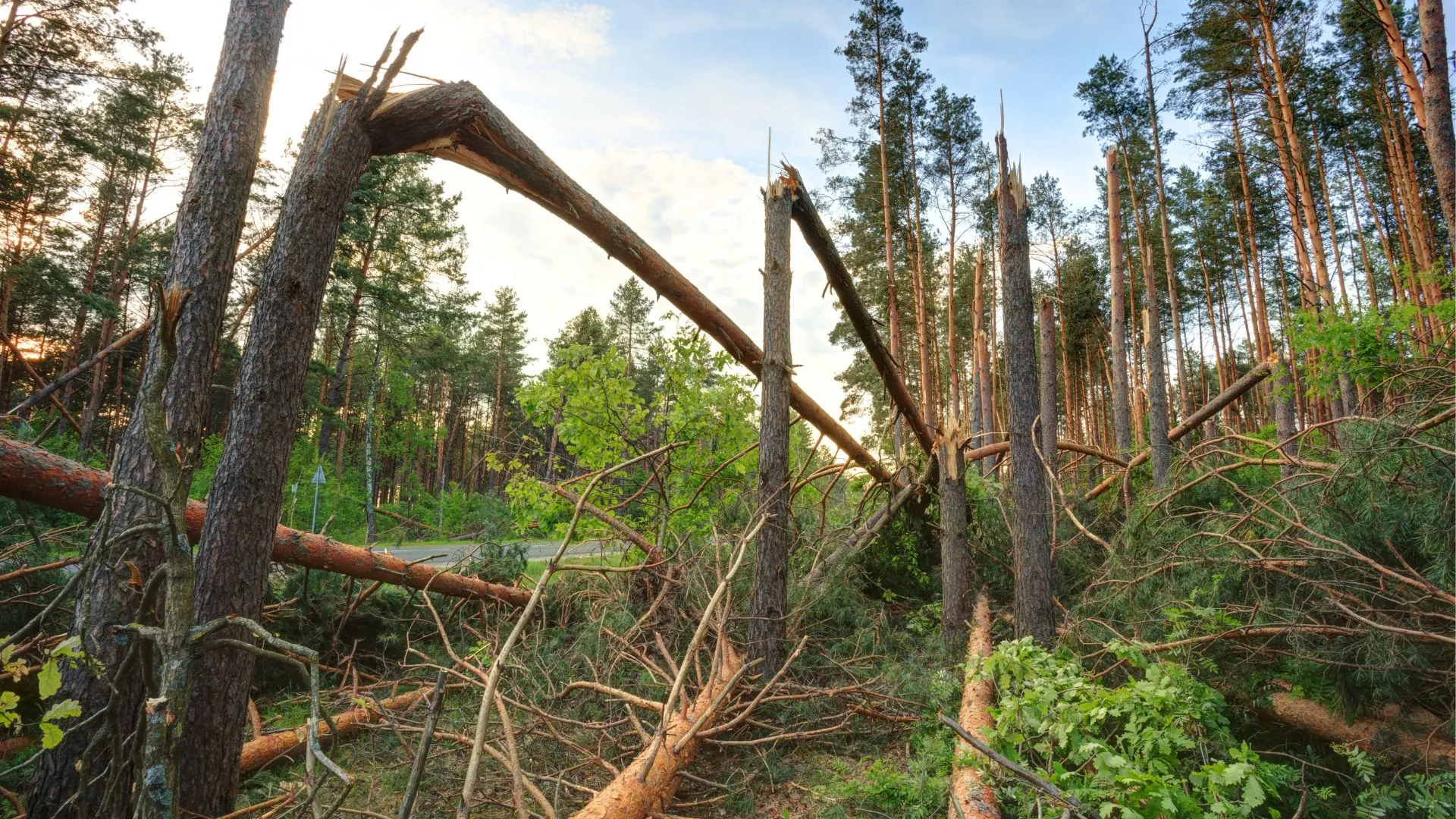
Every time a big storm rolls across southeast Wisconsin, our phone starts ringing before the rain stops. Trees on roofs. Limbs through windshields. A spruce lying across the driveway so nobody can get to work.
Here’s what we notice after years of cleaning up those messes: most of the trees that fail in storms were already telling someone they had a problem. A dead limb. A crack. A lean that got worse over the summer. The storm just finished the job.
The good news is you don’t need to be an arborist to spot many of those warning signs. This guide walks you through a simple check of your own yard, explains what Wisconsin weather does to trees, and tells you when it’s time to call in help.
What Wisconsin Storms Actually Do to Trees
People think of storm damage as one thing, but around Belgium, Port Washington, and West Bend, trees get hit by three very different kinds of weather.
Summer Thunderstorms and Straight-Line Winds
From May through August, fast-moving thunderstorms can bring gusts of 60 mph or more. Straight-line winds push hard on a tree’s full summer canopy, which acts like a sail. Trees with heavy, one-sided crowns or shallow roots in wet soil are the first to go. After a soaking rain, the ground softens and even healthy trees can tip.
Heavy, Wet Spring Snow
A late March or April snow is one of the worst things for trees here. The snow is heavy and wet, it sticks to every branch, and some trees are already starting to leaf out. That weight snaps tops out of pines and splits multi-trunk trees down the middle. One of our customers still has photos of what the 2023 spring snowstorm did to their yard.
Ice Storms
Freezing rain coats every twig in ice. A tree can carry many times its normal weight in ice, and brittle species like silver maple, Bradford pear, and dead ash break apart. Ice damage often isn’t obvious right away — cracked limbs can hang in the canopy for weeks and fall on a calm day.
Lake Michigan Wind
If you live near the lake, you already know the wind comes from the east here. Strong northeast storms off Lake Michigan push trees in a different direction than they’re used to leaning, which can loosen roots on trees that have stood for decades.
Walk Your Yard: A 15-Minute Storm Check
Pick a clear day, grab your phone for photos, and look at each tree that could hit something important if it fell: the house, garage, driveway, fence, play set, or a neighbor’s roof.
Look Up at the Canopy
- Dead branches. Dead limbs have no leaves in summer, no buds in winter, and bark that’s peeling or missing. These are called “widowmakers” for a reason.
- Hangers. A broken limb stuck up in the canopy from an earlier storm can drop at any time.
- Sparse or thin leaves. A crown that’s much thinner than the trees around it often means root or trunk problems.
- Branches over the roof. Limbs that hang over your house don’t have to be dead to be a problem. They scrape shingles, drop debris in gutters, and give squirrels a highway.
Look at the Trunk
- Cracks and splits, especially where two main trunks meet in a tight “V.” That joint is weak and often splits in wind or snow.
- Missing bark, soft wood, or holes that you can push a screwdriver into.
- Mushrooms or shelf fungus growing on the trunk. Fungus on the outside usually means rot on the inside.
Look at the Base and Roots
- A new or growing lean. Some trees have always leaned. A lean that’s new, or getting worse, is a warning.
- Heaved or cracked soil on one side of the trunk, which can mean roots are pulling loose.
- Cut or damaged roots from a driveway, patio, or utility trench put in during the last few years.
- Fungus at the base, which can point to root rot.
Pay special attention to ash trees. Emerald ash borer has killed ash trees all over Ozaukee and Washington counties. A dead ash dries out fast and becomes brittle. They’re some of the most dangerous trees we take down, and they get more dangerous every year they stand.
Simple Fixes That Make a Big Difference
Once you know which trees have problems, most of the fixes are straightforward.
Remove Dead Wood First
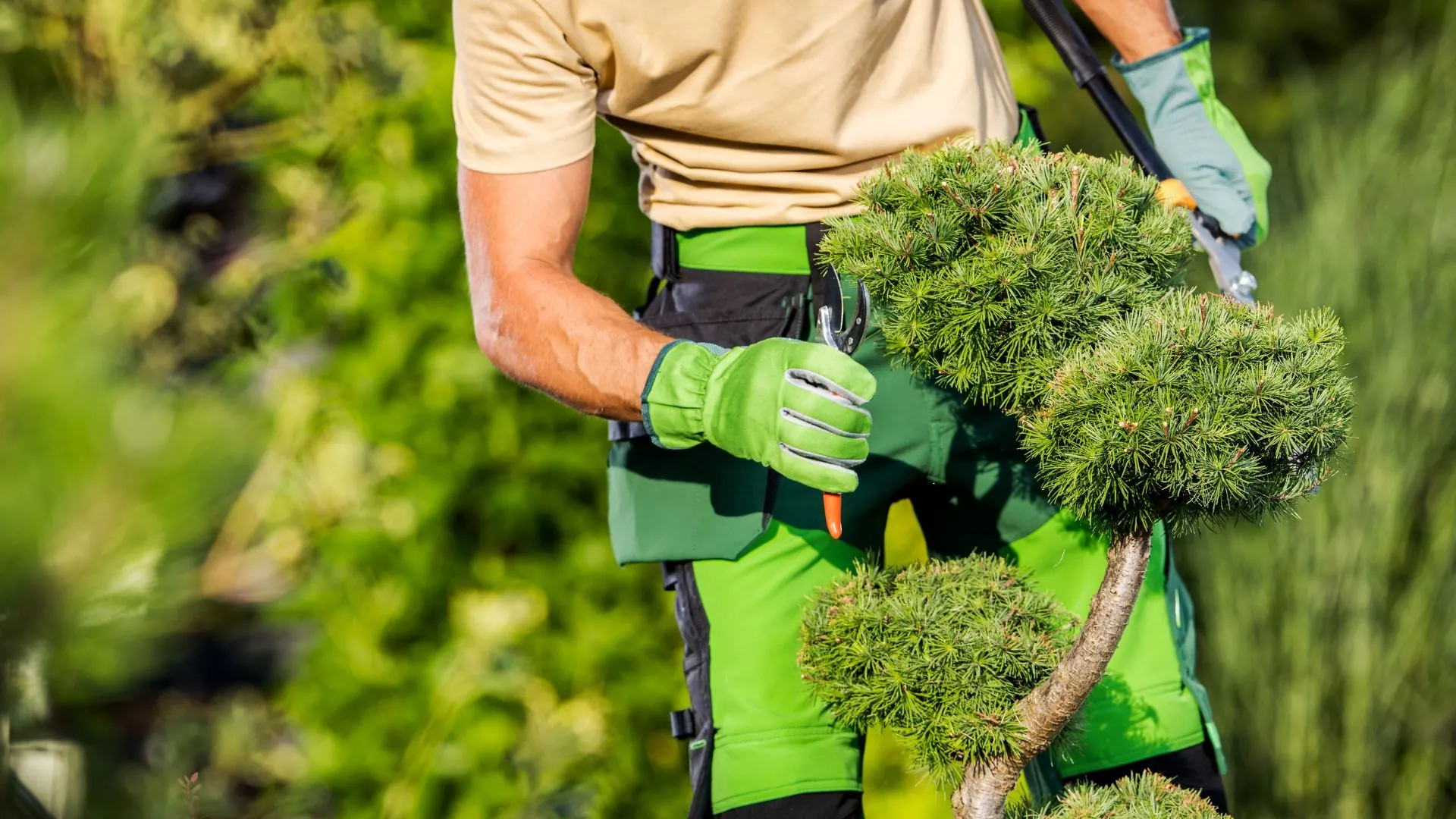
Taking out dead and broken limbs is the single best thing you can do before storm season. It removes the pieces most likely to fall and lets you see the rest of the tree clearly. Our tree trimming crew does this on almost every job.
Thin Heavy Crowns
A thick crown catches wind like a sail. Careful thinning — removing some interior branches without “topping” the tree — lets wind pass through and lowers the stress on the trunk. Done right, you’ll barely notice it from the street.
Lift Limbs Off the Roof
Branches should be at least several feet from your roof and siding. That keeps them from rubbing through shingles in wind and lets your roof dry after rain.
Support Split or Weak Trunks
Some trees are worth saving even with a weak joint. Cabling and bracing uses steel cables and rods to hold heavy leaders together so they don’t split in the next windstorm. It doesn’t fix a dying tree, but for a healthy tree with a bad fork, it can add many good years.
Know When Removal Is the Safer Choice
If a tree is dead, badly rotted, or leaning toward the house, removal is often the only safe answer. It’s always cheaper to take a tree down on a calm day on your schedule than to pay for an emergency removal after it lands on the garage.
When It’s Time to Call a Pro
A few things are never DIY jobs:
- Any tree touching or near power lines. Stay away and call the utility — We Energies handles the lines coming to your house.
- Anything that needs a chainsaw above your head or a ladder in a tree.
- Trees leaning toward buildings or hanging over neighbors’ property.
- Big hangers stuck in the canopy.
If you’re not sure, call or text us a photo. Tanner will tell you honestly whether it needs work now, can wait, or is just fine. Plenty of trees we look at get a clean bill of health.
What to Do Right After a Storm
Even well-prepared trees can get hit. If a storm has already come through:
- Stay away from downed wires and anything they touch.
- Take photos of the damage before anything is moved, for your insurance company.
- Don’t climb or cut hung-up limbs yourself. They’re under tension and can spring back.
- Call for help. Alpha Tree Service is open 24 hours for storm damage cleanup and emergency tree removal.
For the full step-by-step, read our guide on what to do when a tree falls on your property.
Get Ahead of the Next Storm
The best time to deal with a risky tree is before the forecast turns ugly. A quick walk around your yard this week could save you a roof repair, an insurance claim, and a very long night.
If you’d like a second set of eyes, we’re happy to come look. Our quotes are free, and our ISA Certified Arborist will tell you straight what needs attention — and what doesn’t.