The tree is gone, but the stump is still there. Maybe it’s been there for years. You mow around it, trip over it in the dark, and wonder what to do about it.
You have two main options: stump grinding or full stump removal. Both make the stump disappear, but they work very differently and leave your yard in different shape. This guide explains how each one works, what each costs you in time and mess, and how to choose.
Why Old Stumps Are Worth Dealing With
Some people leave stumps for years. That’s fine in a back corner of the woods, but in a yard, stumps cause problems.
- Trip hazards for kids, guests, and anyone out after dark
- Mower damage from hitting hidden roots and edges
- Sprouts from trees like boxelder and cottonwood that keep coming back
- Insects like carpenter ants and termites, which move into rotting wood
- Fungus that grows on the decaying stump and roots
- Wasted space where you could plant, build, or just have grass
In Wisconsin clay, a big stump can take many years to rot on its own. If you want your yard back sooner, it’s time to pick a method.
How Stump Grinding Works
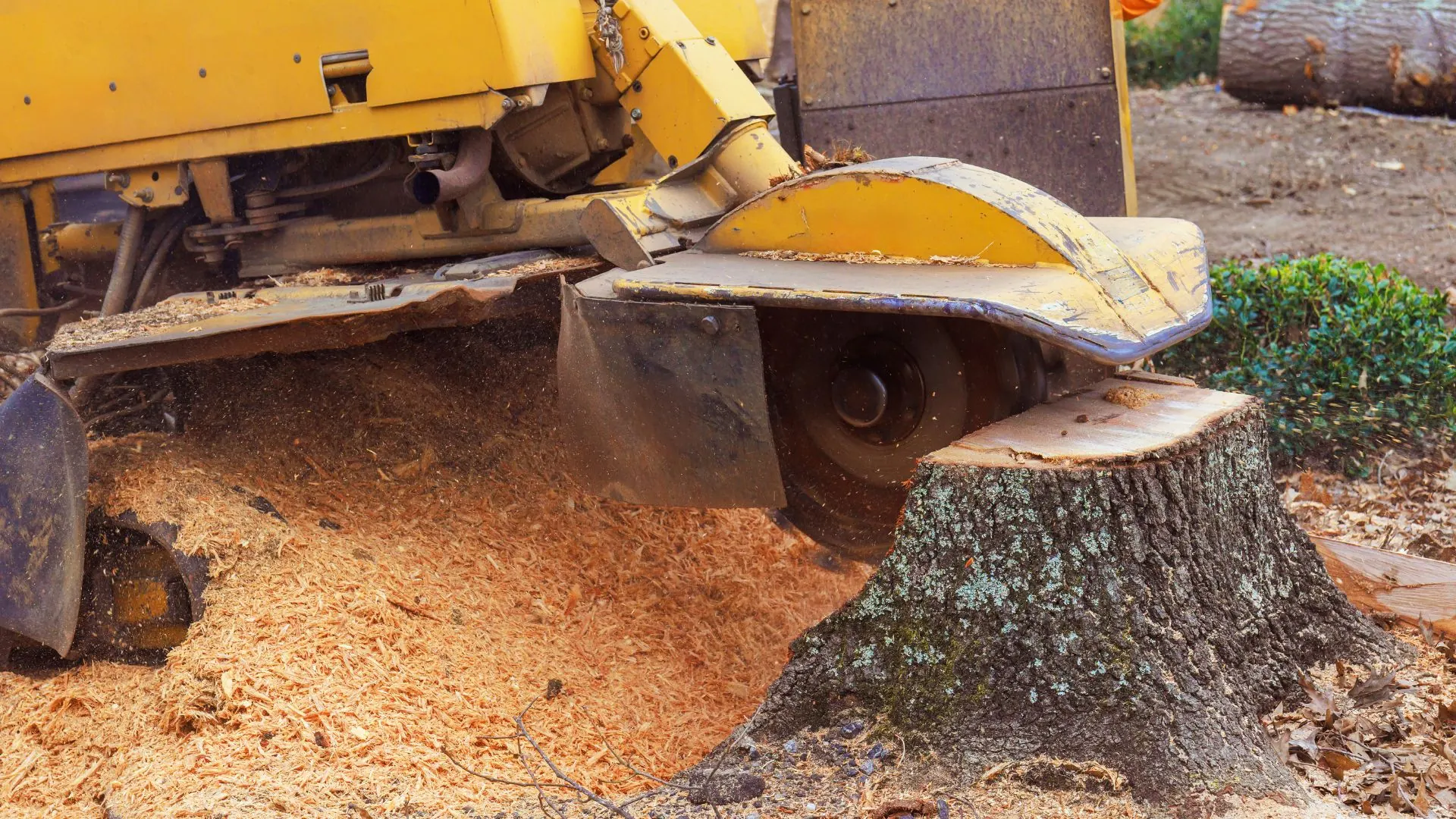
A stump grinder is a machine with a spinning wheel lined with hard, sharp teeth. The operator swings the wheel back and forth across the stump, chewing it into small chips a little at a time.
We grind the stump and its main surface roots down below ground level. The rest of the roots stay underground, where they slowly rot away.
What’s Left After Grinding
- A pile of grindings, which is a mix of wood chips and soil, usually more than you’d expect
- A shallow bowl where the stump used to be
- Roots underground that you won’t see and that will break down over time
When Grinding Is the Better Choice
- You want to plant grass over the spot
- You’re putting a flower bed or small shrubs there
- The stump is near a house, fence, sidewalk, or patio
- You want fast work with little damage to the lawn
- You have several stumps to clear at once
For most homeowners, grinding is the right answer. It’s quick and tidy. Learn more about our stump grinding service.
How Full Stump Removal Works
Full stump removal means pulling out the stump and its root ball. On a big tree, that’s a lot of wood and soil. We use heavy equipment, like our compact track loader, to dig around the stump, cut major roots, and lift the whole thing out.
What’s Left After Full Removal
- A large hole that needs to be filled with soil
- Torn-up ground around the hole from digging and equipment
- A big stump and root ball that has to be hauled away
When Full Removal Makes Sense
- You’re building something on that spot, like a garage, addition, or shed
- A new driveway, patio, or walkway is going in
- You’re clearing a lot for construction
- You’re regrading land and need roots out of the way
- You’re clearing many trees and brush at once, like old fence lines
Full removal is a bigger job, but it’s the only choice when roots under the ground would get in the way of a foundation or a solid base. It’s often part of a larger land clearing project.
Stump Grinding vs. Removal Side by Side
| Question | Stump Grinding | Full Stump Removal |
|---|---|---|
| What gets removed? | Stump and surface roots, below ground level | Stump and root ball |
| What’s left behind? | Grindings and a shallow bowl | A large hole to fill |
| Damage to the lawn? | Small | More, from digging and equipment |
| How long does it take? | Usually quick for a single stump | Longer, often part of a bigger job |
| Cost compared to each other | Usually less | Usually more |
| Good for new grass or beds? | Yes | Yes, but more to repair |
| Good for building or paving? | Not always | Yes |
| Best for | Most home yards | Construction and land clearing |
Does the Kind of Tree Matter?
Yes, a little. Some trees are more stubborn than others.
- Sprouting trees. Boxelder, cottonwood, poplar, willow, black locust, and buckthorn can send up new shoots from their roots after the stump is gone. Grinding usually takes care of it, but you may need to clip sprouts for a season or two.
- Pines and spruce don’t sprout from their roots. Once they’re ground, they’re done.
- Ash stumps from trees killed by emerald ash borer grind just like any other stump.
- Oak stumps are dense and slow to rot. If the tree died from oak wilt, talk with us about the nearby oaks, since the disease can spread through connected roots.
Grinding Stumps in Wisconsin Clay and Cold
A few things are a little different here.
- Clay settles. As roots rot, the ground above them can sink over the next few years. Plan to add a bit of topsoil as it settles.
- Frost heaves. Freeze and thaw can push old roots and loose soil up in spring. A light top-up fixes it.
- Winter works. We can grind stumps in winter as long as the ground and stump aren’t buried in deep snow. Frozen ground can even protect the lawn from equipment tracks.
Tip: Before any stump is ground, underground lines need to be marked through Diggers Hotline (811). Also point out any sprinkler lines, buried dog fences, or landscape lighting wires you know about, since those aren’t marked.
What to Do With the Hole and the Grindings
After grinding, here’s how to get your lawn back:
- Rake out most of the grindings. Use them as mulch around trees or on paths.
- Fill the hole with topsoil. Pack it lightly and mound it a bit higher than the lawn to allow for settling.
- Seed or sod. Spring and late summer are the best times for grass seed here.
- Water regularly until the new grass is established.
- Top up low spots over the next year or two as the old roots decay.
Planting a New Tree Where the Old One Stood
It’s tempting to plant a new tree right where the old one was. That can work, but it’s easier to plant a few feet to the side, where the soil is undisturbed. If you want the exact same spot, dig out the grindings and replace them with good soil first. Our guide to the best trees to plant in Wisconsin yards can help you pick a replacement.
When Leaving a Stump Makes Sense
Sometimes the best choice is to do nothing at all. A stump can stay put when:
- It’s on a steep slope or bank. Along bluffs and riverbanks, the old roots still help hold soil while they slowly rot.
- It’s out of the way, in a wooded corner where no one mows or walks.
- You want wildlife habitat. Rotting stumps feed insects, which feed birds, and give toads and salamanders cover.
- You want a garden feature. A wide, flat stump can hold a planter or serve as a seat.
If you leave a stump, cut it low and flat so it’s less of a trip hazard, and keep an eye out for sprouts.
Can You Get Rid of a Stump Yourself?
You can, but it’s often more work than people expect.
- Chemical stump removers speed up rot, but they can still take a long time to work.
- Digging by hand is fine for very small stumps but brutal for anything bigger.
- Rental grinders can do the job, but they’re heavy and throw chips and rocks hard. Many people find a pro is worth it for big stumps.
- Burning is unsafe near homes and often not allowed. Check your town’s rules.
Clear Your Yard of Stumps for Good
For most yards, stump grinding is the fastest, cleanest way to get rid of a stump. Full removal is best when you’re building or clearing land. Not sure which you need? We’ll look at the stump, ask about your plans, and give you a free quote either way. And if the tree is still standing, we can handle the tree removal and the stump in one visit.