Planting a tree is one of the few things you do for your yard that pays off for fifty years or more. It can also be a fifty-year mistake if the tree is wrong for the spot. We take down a lot of trees that were simply planted in the wrong place: a silver maple too close to the house, a row of ash that all died at once, a spruce that outgrew the front walk.
This guide covers the trees that do well in southeast Wisconsin, a few to skip, and how to plant so your new tree has the best shot.
Start With Your Yard, Not the Nursery Tag
Before you fall in love with a tree at the garden center, look hard at where it’s going. A few things matter more than anything else.
- Cold hardiness. Most of our area is USDA zone 5b, with a strip of zone 6a along the Lake Michigan shore. Stick with trees rated for zone 5 or colder and you’re safe.
- Soil. Much of Ozaukee, Washington, and Sheboygan counties sits on heavy clay. Clay holds water in spring and bakes hard in August. Some trees love it. Many don’t.
- Wind and salt. Near the lake, trees take cold northeast wind. Near roads, they take salt spray from plows.
- Space. Look up for wires. Look out for the house, driveway, and neighbor’s yard. Picture the tree at full size.
- Sun. Most shade trees need full sun to grow well. A few, like serviceberry, handle part shade.
Our Five Favorite Trees for Wisconsin Yards
These were on our original list, and they’re still great choices. Each one comes with a thing or two to know.
Sugar Maple
Nothing beats a sugar maple in October. It’s native, long-lived, and handles our cold with ease. The catch is that it doesn’t like salt or packed, soggy soil. Plant it well back from salted roads and driveways, and give it a big, open space where its roots won’t be compacted by cars or foot traffic.
Eastern White Pine
White pine grows fast, stays soft-looking, and makes a great screen or windbreak. It’s also Wisconsin’s native giant. It prefers well-drained soil and doesn’t like road salt, so keep it away from the street. As it ages, it drops its lower branches, which is normal. Heavy, wet snow can break the tops of tall pines, so an occasional trim of weak tops is smart.
Red Oak
Red oak is strong, grows faster than most oaks, and turns deep red in fall. The one big thing to know is oak wilt. This disease kills red oaks quickly and spreads through fresh wounds in spring and early summer. Never prune or wound an oak from April through July. Do any pruning in winter. Our guide on when to prune trees in Wisconsin explains the timing.
Serviceberry
Serviceberry is a small tree with white flowers in early spring, berries in June that birds love, and orange-red fall color. It fits smaller yards, handles part shade, and can grow as a single trunk or a clump. It’s one of the best trees for planting near a house.
Eastern Redbud
Redbud gives you bright pink flowers on bare branches in early spring. It stays small and works well near patios. Redbud is at the northern edge of its range here, so buy trees grown from northern seed sources when you can, and plant them in a spot out of the harshest winter wind.
More Trees That Handle Clay Soil and Lake Wind
If you want more options, these trees do well in our conditions. They also add variety, which matters. When Dutch elm disease and then emerald ash borer came through, neighborhoods planted with one kind of tree lost them all.
| Tree | Size | Good For | Watch Out For |
|---|---|---|---|
| Bur oak | Large | Tough clay, open yards, long life | Slow to grow; needs lots of room |
| Swamp white oak | Large | Wet clay and low spots | Oak wilt timing for pruning |
| Hackberry | Large | Street sides, salt, drought | Harmless leaf bumps some years |
| Kentucky coffeetree | Large | Tough spots, few pests | Seed pods on female trees |
| Disease-resistant elm | Large | Classic vase-shaped shade | Buy named resistant varieties only |
| American basswood (linden) | Large | Shade, bees love the flowers | Needs space; drips aphid honeydew some years |
| Freeman maple | Medium to large | Fast shade, fall color | Can be brittle in ice storms |
| River birch | Medium | Wet spots, peeling bark | Drops twigs; needs water in drought |
| Serviceberry | Small | Near homes, part shade | Birds eat every berry |
| White or Black Hills spruce | Medium to large | Windbreaks and screens | Keep away from road salt |
Trees We’d Think Twice About Planting
Some trees cause more problems than they’re worth, at least in the wrong spot.
- Ash. Emerald ash borer was first found in Wisconsin in Ozaukee County in 2008 and has killed ash across the region. Don’t plant new ones. Our emerald ash borer guide explains what to do with the ones you have.
- Silver maple near buildings. It grows fast but has weak wood that breaks in ice and wind. Its roots also chase sewer lines and lift sidewalks.
- Callery pear, including Bradford pear. It splits apart as it ages, and the Wisconsin DNR lists it as a plant to watch for invasive spread.
- Amur maple. The straight species is on Wisconsin’s restricted invasive plant list.
- Colorado blue spruce. It’s popular, but in our humid summers it often gets needle cast and loses its lower branches. Black Hills or white spruce are better picks.
- Cottonwood and willow near the house. Huge, fast, brittle, and thirsty.
How to Plant a Tree So It Actually Thrives
Most young trees that die in their first few years die from planting mistakes, not bad luck. Follow these steps:
- Call Diggers Hotline (811) a few days before you dig. It’s free, and it’s the law in Wisconsin before digging.
- Find the root flare. That’s where the trunk widens at the base. It should sit at or slightly above the soil line. Many nursery trees come with it buried, so scrape away extra soil.
- Dig wide, not deep. Make the hole two to three times as wide as the root ball but no deeper. In clay, a deep hole fills with water like a bathtub.
- Loosen circling roots. Tease out or cut roots that wrap around the root ball so they grow outward.
- Backfill with the soil you dug out. Don’t add a lot of rich compost to the hole. Roots like it too much and never spread into the clay around it.
- Water deeply right after planting.
- Mulch 2 to 4 inches deep in a wide ring, keeping mulch off the trunk.
- Stake only if needed, and remove stakes after one year.
Tip: A new tree needs about an inch of water a week for its first two summers, more in hot, dry spells. Stick a finger in the soil. If it’s dry two inches down, water slowly and deeply.
Right Tree, Right Spot Near Homes and Power Lines
Placement is where most tree problems start. A few simple rules:
- Under power lines, plant only small trees that top out well below the wires. Otherwise, the utility may have to trim it hard later.
- Near the house, keep large trees well back so their crowns won’t rub the roof.
- Near the street, remember that the strip between the sidewalk and curb usually belongs to your village or city. Check with them before planting there.
- Near the lot line, think about your neighbor. Branches and roots don’t stop at the fence.
Clearing the Way for Your New Tree
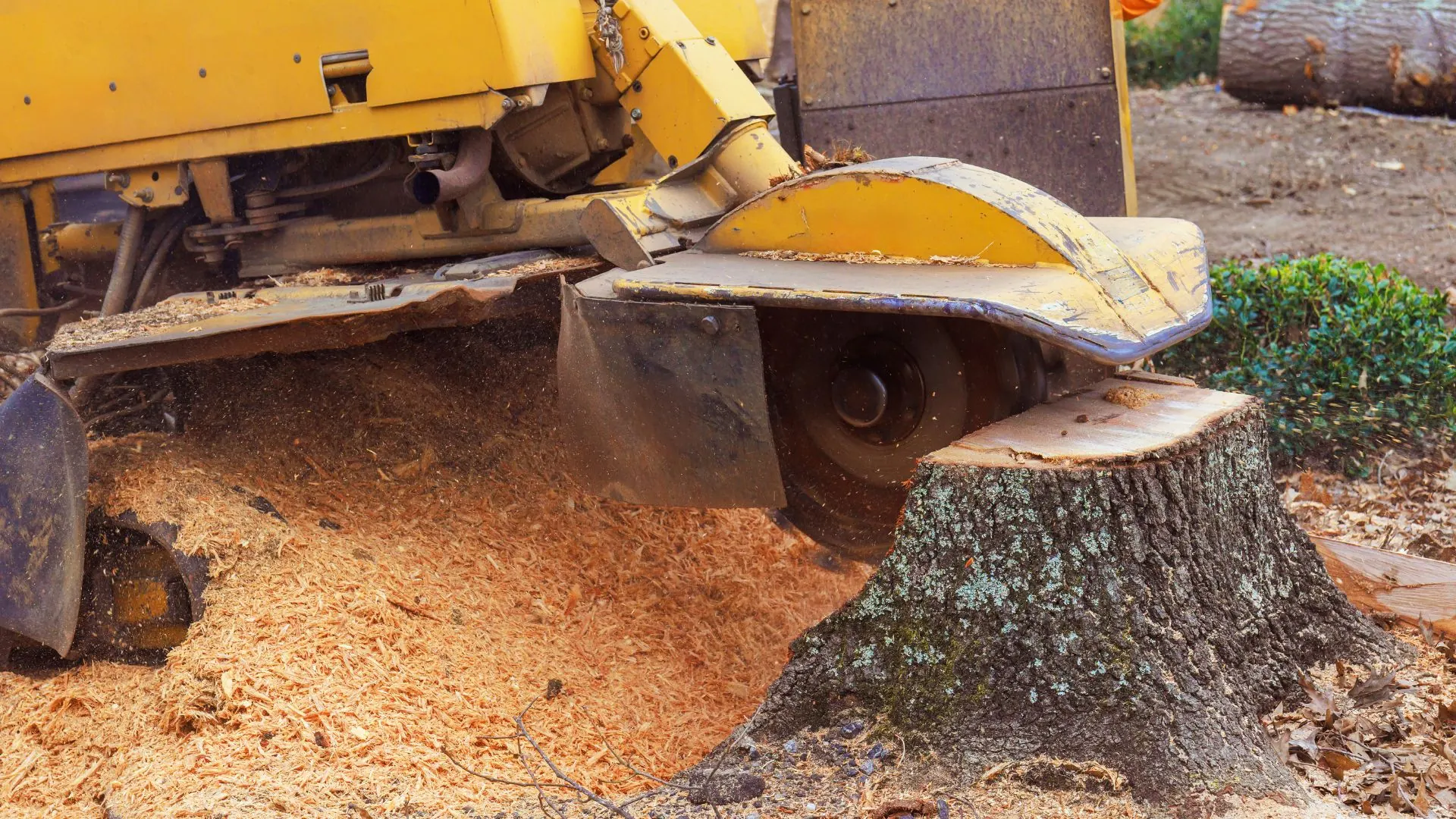
Often the best planting spot is where an old tree used to be. If there’s a stump in the way, stump grinding clears it below the surface so you can plant nearby. Our post on stump grinding vs. removal explains which option works best before replanting.
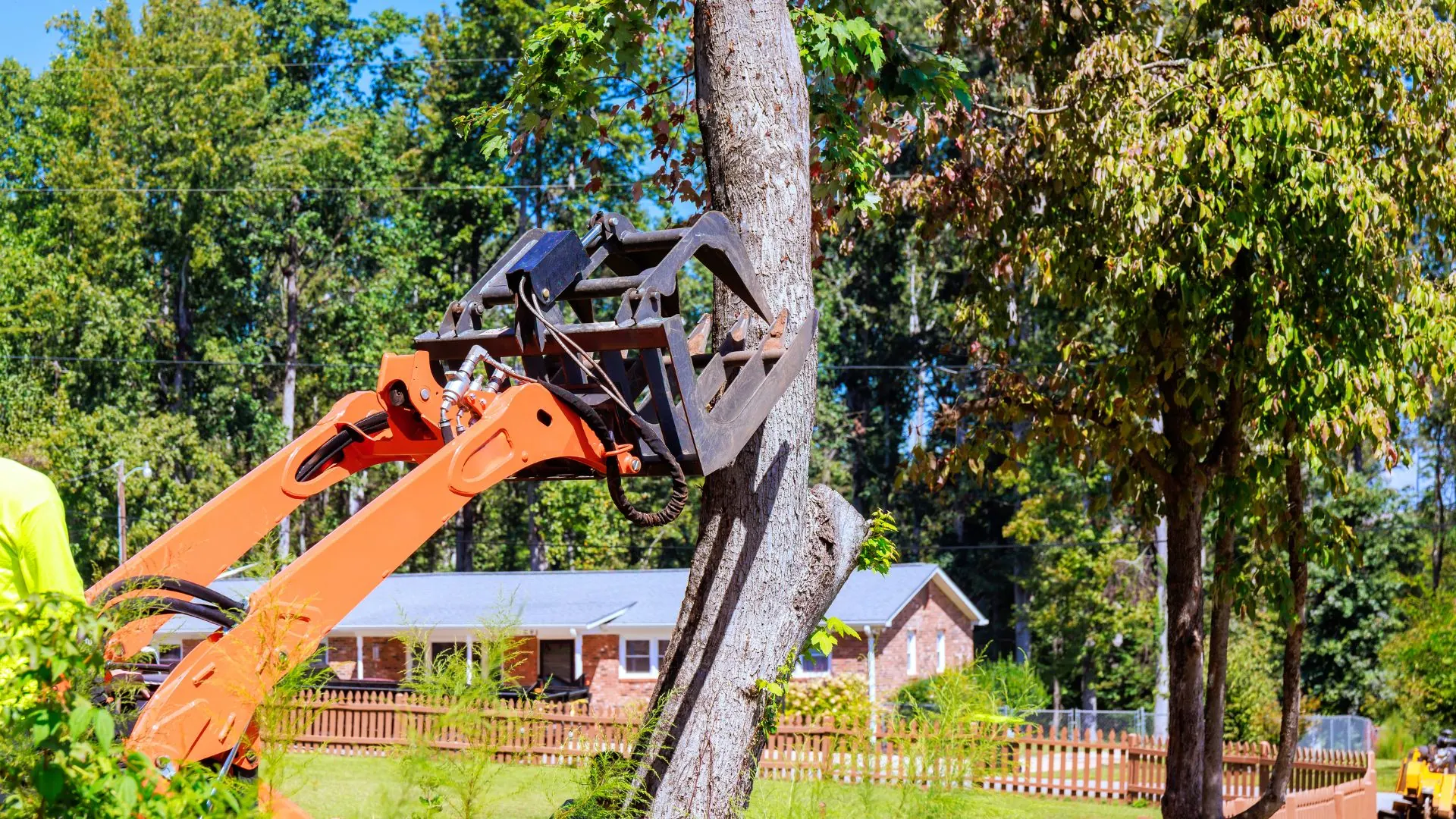
If a dead ash, overgrown spruce, or failing maple needs to go first, we can handle that too. And once your new tree is in, a little early tree trimming to set up a strong shape pays off for decades.
Plant Smart and Enjoy It for Decades
The best tree for your yard is one that fits the spot, handles our clay and winters, and adds some variety to the neighborhood. If you’d like advice while we’re out, or you need an old tree or stump cleared to make room, call us. Quotes are free, and we’re always happy to talk trees.