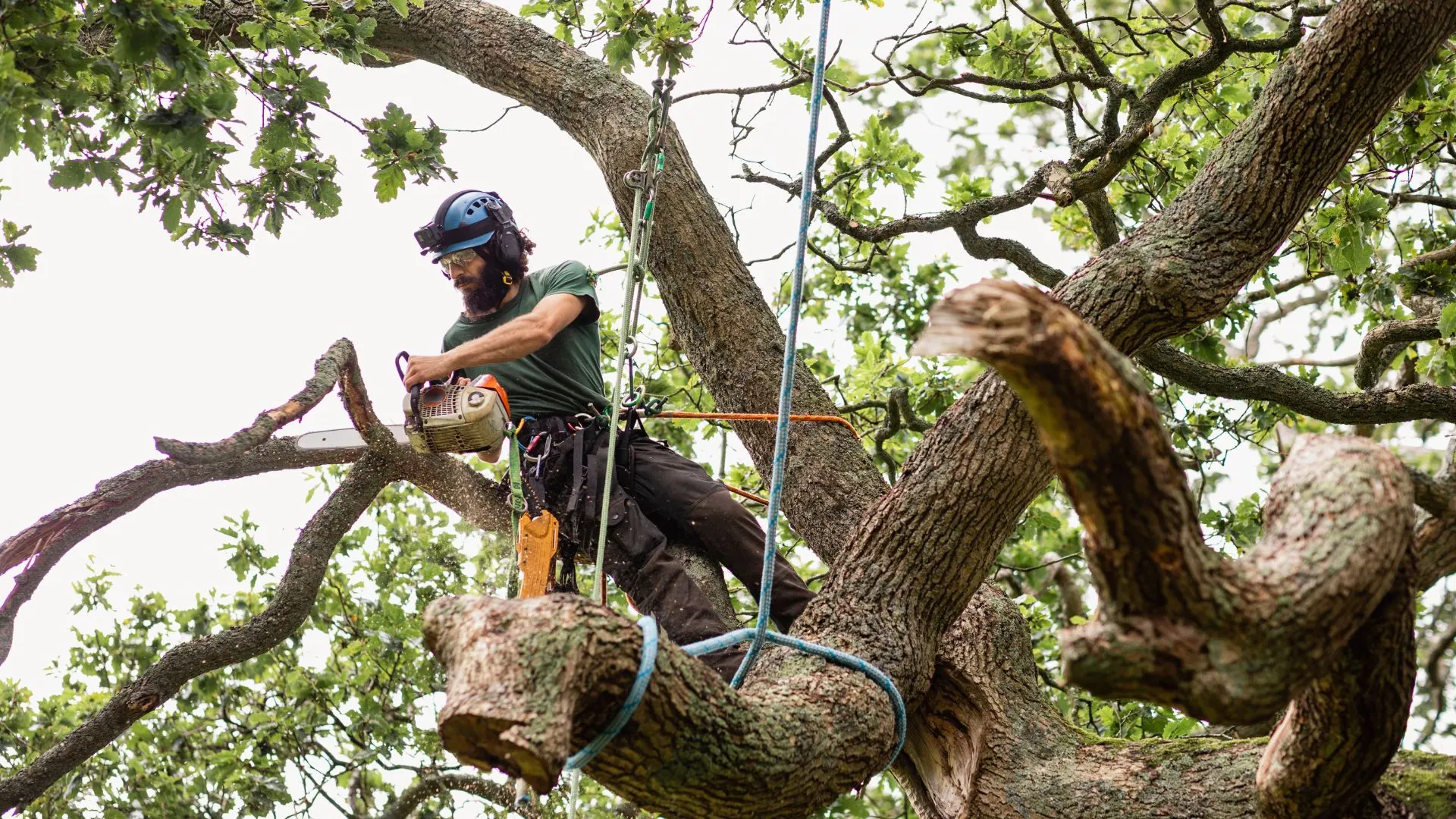
Trees add shade, privacy, and real value to a home. They also hide their problems well. A maple can look full and green from the street while rot works through its trunk. An ash can leaf out one more spring after emerald ash borer has already killed most of it.
The good news is that trees almost always give warning signs before they fail. You just have to know where to look. After years of climbing, trimming, and removing trees across Ozaukee, Washington, and Sheboygan counties, these are the five signs we trust the most.
Why Small Tree Problems Grow Fast in Wisconsin
Our weather is hard on trees. A problem that might sit quietly for ten years somewhere mild can turn dangerous in two or three Wisconsin winters.
- Freeze–thaw cycles open small cracks in bark and wood. Water gets in, freezes, and pushes the cracks wider.
- Heavy, wet snow in March and April loads branches with far more weight than they carry in summer.
- Clay soils hold water after spring rains. Roots in soggy clay grip poorly, so leaning trees tip more easily.
- Wind off Lake Michigan hits trees from the east and northeast, which is a different direction than most of our summer storms.
That’s why a warning sign here deserves attention sooner rather than later.
Sign 1: Dead or Dying Branches
Dead limbs are the most common problem we see, and the easiest one to spot. They don’t bend in the wind the way live wood does. They snap, and they often fall on calm days with no warning at all.
How to Tell a Dead Branch From a Sleeping One
In winter, every hardwood looks bare, so it can be hard to tell what’s dead. Try these checks:
- Look for buds. Live twigs have plump buds at the tips. Dead twigs are bare and snap like dry spaghetti.
- Check the bark. Bark that is peeling off in sheets, or missing, usually means the wood under it is dead.
- Compare in June. A limb with no leaves when the rest of the tree is full is dead or dying.
- Watch the top. Dieback that starts at the top of the crown and works down often means root or trunk trouble.
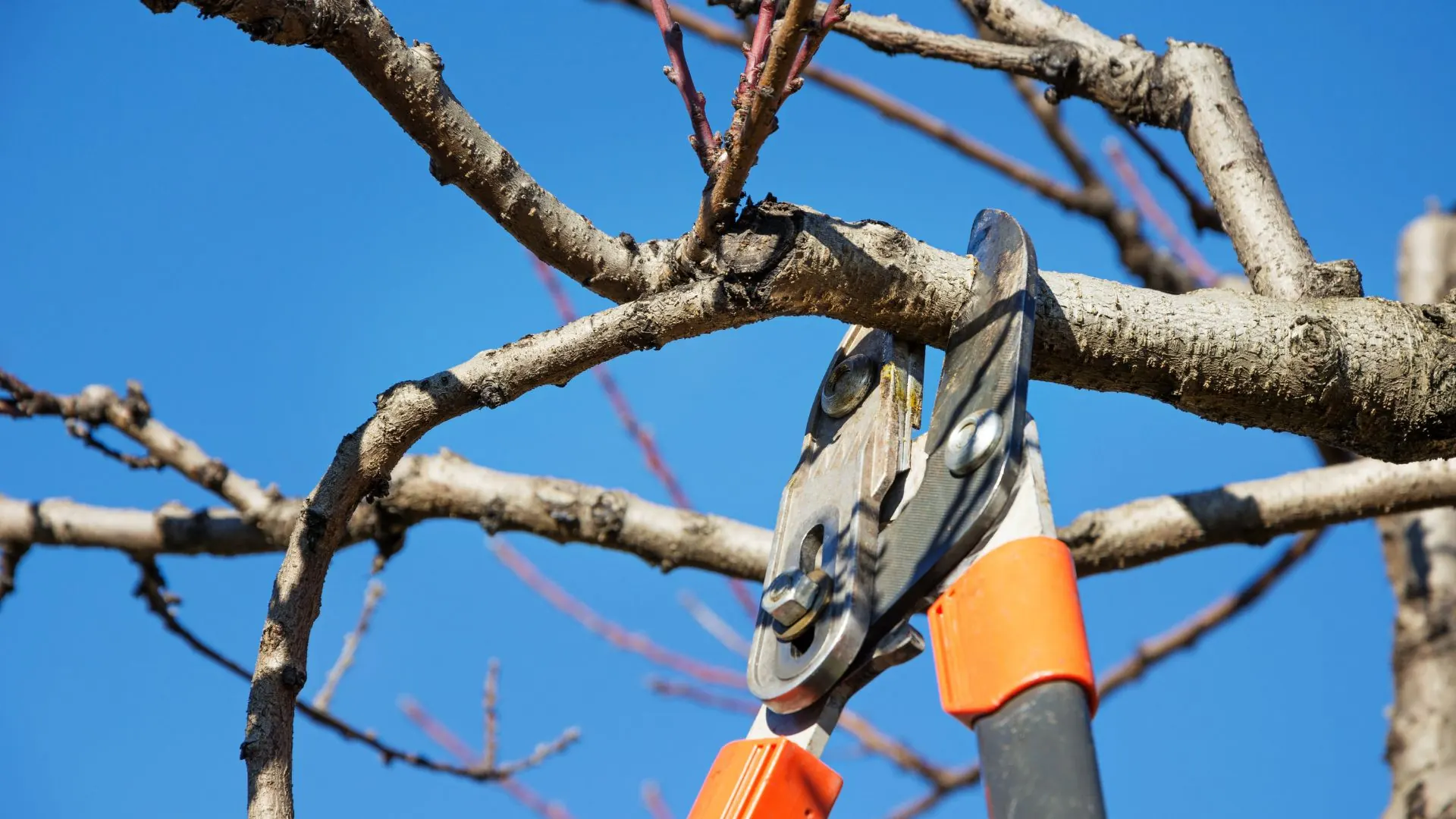
A few small dead twigs inside the crown are normal. Dead limbs bigger than your wrist, especially over a roof, driveway, or play area, are a job for professional tree trimming.
Sign 2: A Tree That Starts to Lean
Plenty of trees grow with a lean and stay that way for fifty years. They grow extra wood on one side to hold themselves up. A lean is only a warning sign when it’s new or getting worse.
Old Lean or New Lean?
Here’s how to tell the difference:
- Look at the top of the tree. An old leaner usually curves back toward straight near the top. A tree that leans in a straight line from the ground up is more likely to be moving.
- Check the soil on the far side. Cracked, raised, or mounded soil opposite the lean means roots are pulling loose.
- Look for exposed roots that weren’t there last year.
- Think about recent work. A new driveway, patio, or utility trench within the last few years may have cut the roots that were holding the tree up.
A leaning tree over your house is not a wait-and-see problem, especially after a soaking spring rain has softened the clay.
Sign 3: Cracked, Split, or Missing Bark
Bark is the tree’s skin. When it cracks or falls away, the wood underneath is open to rot and insects.
Some bark damage is serious:
- Long vertical cracks in the trunk, which can come from frost or from the trunk splitting under stress
- A crack where two main trunks meet in a tight “V” shape
- Bark falling off in big patches with bare, gray wood underneath
- Small D-shaped holes and vertical bark splits on ash trees, which are classic signs of emerald ash borer
- Light-colored patches where woodpeckers have stripped the outer bark on an ash while hunting larvae
And some peeling is perfectly normal. Birch, shagbark hickory, sycamore, and older silver maples shed bark as part of how they grow.
Tip: Take a photo of any trunk crack and put a pencil mark or piece of tape at each end. If the crack is longer next month, call someone. Cracks that grow are cracks that are moving.
Sign 4: Thin, Small, or Off-Color Leaves
The crown is a good report card for the roots. When a tree isn’t getting enough water or food, the leaves show it first.
Watch for:
- A thin crown you can easily see sky through, compared to the same kind of tree down the street
- Leaves that are smaller than normal
- Early fall color in August on a maple or other hardwood
- Brown, scorched leaf edges in midsummer
- Oak leaves wilting and dropping in June or July while still partly green
- Spruce needles turning purple or brown from the bottom branches up
That last pair matters. Sudden wilting on a red or pin oak in summer can be oak wilt, which kills red oaks fast. Brown inner needles on a blue spruce are often needle cast. Our guide to spotting common tree diseases in Wisconsin covers both.
Sign 5: Mushrooms and Shelf Fungus on the Trunk
Fungus is the part of rot you can see. The rot itself is inside the tree, often much bigger than the mushroom suggests.
Fungus Growths That Mean Trouble
- Shelf-like conks growing out of the trunk or large limbs
- Clusters of honey-colored mushrooms at the base in fall
- Mushrooms growing from the root flare or from roots near the trunk
- Dark, oozing wet spots on the bark
One mushroom doesn’t mean a tree has to come down. But it does mean someone should check how much sound wood is left. A trunk can look solid from the outside and still be hollow in the middle.
Watch It or Call Soon? A Quick Guide
Not every sign is an emergency. Use this table to sort out what can wait and what can’t.
| Warning Sign | Usually OK to Watch | Call Us Soon |
|---|---|---|
| Dead branches | Small twigs inside the crown | Limbs thicker than your wrist over a house, car, or path |
| Lean | Old lean that curves back toward straight | New lean, cracked soil, or exposed roots |
| Bark damage | Normal peeling on birch or hickory | Growing cracks, splits at a fork, D-shaped holes on ash |
| Leaf problems | Spotty leaves after a wet spring | Sudden wilting on an oak or dieback from the top |
| Fungus | Mushrooms in the lawn away from the trunk | Conks on the trunk or mushrooms at the root flare |
More Red Flags Worth a Phone Call
The five signs above cover most problems, but a few others deserve a look, too:
- Any ash tree you haven’t had checked. Most untreated ash in our area are dead or dying from emerald ash borer, which was first found in Wisconsin in Ozaukee County in 2008.
- Branches touching power lines. Stay away and call We Energies.
- Heavy limbs over the roof that rub shingles or fill gutters.
- Roots that wrap around the trunk at the soil line, which can slowly choke a tree.
- Construction nearby. Digging within the root zone can kill a tree two or three years later.
What Happens When Our Crew Comes Out
When you call about a worried tree, Tanner or our ISA Certified Arborist comes out to look at it in person. We check the crown, trunk, root flare, and soil. We’ll tell you what we see in plain words and what your options are.
Most of the time, the answer isn’t removal. It might be tree health care advice, trimming out dead wood, or cabling a weak fork. We once looked at three trees for a customer and told them the third one was healthy and didn’t need to come down. We’d rather lose a job than cut a good tree.
If removal is the safe choice, we’ll explain why. Our post on when it’s time to remove a tree goes deeper on that decision.
Get a Free Opinion Before the Problem Grows
Most tree problems are cheaper and easier to fix early. A dead limb is a simple trim today and a roof repair after the next storm.
If you’ve spotted any of these signs, call or text us a photo. We serve homes from Belgium and Port Washington to West Bend and Plymouth, and our quotes are always free.